Showing posts with label Environment. Show all posts

Wednesday, November 05, 2008

Some modest suggestions

My decidedly old school recommendation wishlist for the new administration. I look forward with wonder and delight (and probable amazement) to President Obama's actual choices.

Agriculture:  Kathleen Sibelius

Attorney General: Robert Kennedy, Jr.

Commerce: Michael Bloomberg

Defense: Wesley Clark  (when he becomes eligible)

Director of National Intelligence: Jane Harman

Education: Graham Spanier

Energy: Amory Lovins

EPA: Al Gore

FEMA: Douglas Wilder

Health & Human Services: Caroline Kennedy Schlossberg

Homeland Security: Janet Napolitano

Housing & Urban Development: Ellen Sahli

Interior: Olympia Snowe

Labor: Andy Stern

National Security Advisor: Richard Clarke

Poet Laureate: Martin Espada

Special Prosecutor: Dennis Kucinich

State: Bill Richardson

Transportation: Susan Kupferman 

Treasury: Paul Krugman

UN Ambassador:  Bill Clinton

Veterans Affairs:  Max Cleland

Monday, October 06, 2008

Mr Maverick Republican


Feel the Love.

John McCain voted to support Bush over 90% of the time.

Has your life gotten better under Bush?

Has the country been made stronger?

John McCain, the original Bush Baby.

Go ahead George, you can burp him now.

Sunday, August 31, 2008

One from the vaults....

via Reuters:

Gustav disrupts McCain's Republican convention

(Poor Baby. Of course a couple of million 'evacuees'/refugees might argue about who is having what disrupted)

* Bush, Cheney to miss Republican convention

(Much to McSame's relief we might add)

* Most convention work suspended for Monday

(Well the country is better off for that at least)

* McCain may address Republicans from Gulf area

(But only Republicans. The rest of us can go fish (probably along the new Gulf shore just south of Memphis))


By Steve Holland

ST. PAUL, Aug 31 (Reuters) - Republican John McCain on Sunday ordered political speeches canceled for his Republican nominating convention on Monday to avoid a festive atmosphere while Americans cope with Hurricane Gustav.(more)


___________________________________________________

My little meditation on another September day a few years back....

Somewhere over Louisiana, a brain is abuzz


"... Boy there's some champion brush cuttin' to be done down there ... hard bike ridin, tho with all that stuff on the roads ... have ta use the truck ... wonder if Lance would wanna come? he's got such a cute little bald spot ... wonder if Bandur would like to join us ... probably not, he'll just say he's too busy being king like he always does when I want to do something special... damn Secret Service probably wouldn't effin' let me go anyway ... 9/11 ...


... What's for lunch? ... hope they don't forget the pretzels this time ... why did Cheney make me call Da and that nice smiling Clinton boy from next store to come bail me out ... it's like he thinks I'm dumb or sumthin' ... they never let me do what I want ... always making me go to damn meetings ... telling me I can't bomb Terrorhan ... making me wear that dumb thing in my ear so I always have to be listening to Rove blathering on about something when I'm trying to talk ... 9/11 ... won't even let me finish a good book when I find one ...

... And I mean who gives a frog exploding fuck about this New Orleans place ... not our kind of people ... libruls ... poor ... gays ... effin' preverts .... always yelling about the oil bizness ... always complaining about the damn river overflowin, as if spending money I needed elsewhere for the war and bribes was gonna help ... damn levees anyhow ... hey, is that a Jewish name? ... sounds Jewish to me ...gotta have Rove check it out ...

... don't see why we don't just bulldoze the damn place anyhow ... send all those smelly old poor people back to where they came from ... tho it's gonna be easier to do stuff now that the place is a chemical sty ... betcha those smartass environmentalists won't be going on about wetlands now ... just created a whole lot more for 'em, heh heh ... 9/11 ...

... and sure we're showing them Al Kayda creeps how real 'Murikans handle a disaster ... this'll make them think twice before hitting us again. ... hey, maybe this whole thing was an Al Kayda plot all along. ... did those levees really 'break' or were they 'helped' ... maybe it was a moozlum weather machine or super prayers to Devil Al Law or somethin' that steered the storm ... better ask Pat about steerin' hurricanes with prayer ... 9/11 ...

Gotta talk to Karl 'bout all that right away. 
Right after I rub my hands all over his shiny, shiny bald head and calm down a bit."


...9/11 ...

Thursday, August 28, 2008

Arctic Climate Tipping Point Happening Now! Sea Ice in Its “Death Spiral” Scientist Claims

from Treehugger and BBC:


After yesterday’s ominous news that North American permafrost (and presumably European and Asian, as well) stores 60% more greenhouse gases than we thought, here’s another siren announcing that we are rushing full speed ahead towards a climatic tipping point: 

Scientists are reporting that the extent of sea ice in the Arctic is at the second lowest point on record. Currently ice covers 2.03 million square miles; last year's sea ice coverage, 1.59 million square miles, set the record. In the past ten years Arctic sea ice has declined 10 percent.

Given the seriousness of the situation, I’ll let the scientists speak for themselves:

We Are Watching the Tipping Point Happen

Mark Serreze, a scientist from the National Snow and Ice Data Center in Boulder, Colorado was quoted by Reuters:

No matter where we stand at the end of the melt season it’s just reinforcing this notion that Arctic Ice is in its death spiral.


Serreze also told the AP that:

We could very well be in that quick slide downward in terms of passing a tipping point. It’s tipping now. We’re seeing it happen now.


Climate Change Happening More Quickly Than Models Have Predicted

The same article quoted NASA ice scientist Jaw Zwally as saying that within 5-10 years the Arctic could be ice-free in the summer. He added that this also means that:

Climate warming is also coming larger and faster than the models are predicting and nobody’s really taken into account that change yet.


As a commenter pointed out in my post on permafrost from yesterday, this is really the sort of news that should be on the front page of every newspaper, at the top of the broadcast of every nightly news service. I wholeheartedly agree with that sentiment. 

It's hard to not sound shrill with this: Climate change is happening more quickly than we thought in the Arctic and the frozen soils in the region contain a lot more stored carbon than the models used so far. Unless we get a handle on this now (yesterday would've been even better) global warming could very well overtake our efforts to slow it. That's not to say that we should throw in the towel (as no doubt some people will think) but rather is another sign that we have to redouble our efforts to reduce greenhouse gas emissions on a global level.

Tuesday, August 26, 2008

One of the reasons I like Biden as a VP

from Grist:
Joe Biden, Barack Obama's running mate, has earned an 83 percent lifetime score from the League of Conservation Voters during his 35 years representing Delaware in the U.S. Senate, voting fairly consistently with environmentalists and the mainstream of his party. In 2007, while running for president, he said "energy security" was his top priority, and argued that he was well-suited to deal with the challenge thanks to years of experience on the Senate Foreign Relations Committee, which he now chairs. Biden is also a big booster of biofuels. 

Key Points

Primary cosponsor of a "Sense of the Senate" resolution calling on the U.S. to participate in U.N. climate negotiations. He introduced it with Sen. Richard Lugar (R-Ind.) in the current Congress and the previous one.

Cosponsor of the Boxer-Sanders Global Warming Pollution Reduction Act, the most stringent climate bill in the Senate. It would establish a cap-and-trade system for greenhouse-gas emissions and require the U.S. to reduce its emissions to 1990 levels by 2020, and to 80 percent below 1990 levels by 2050. (Biden became a cosponsor of it more than three months after it was introduced and just days after both Hillary Clinton and Barack Obama signed on.)

In 2007, during his most recent run for president, called for raising fuel-economy standards for automobiles to an average of 40 miles per gallon by 2017 by increasing fuel-economy targets within vehicle classes by about one mile per gallon per year.

Called for increasing ethanol and biodiesel production by upping the national renewable-fuel standard to require that the fuel supply include 10 billion gallons of renewable fuel a year by 2010 and 60 billion gallons a year by 2030.

Called for 20 percent of the U.S. electricity supply to come from renewable sources.

Global warming time bomb trapped in Arctic soil: study

from TerraDaily:
Climate change could release unexpectedly huge stores of carbon dioxide from Arctic soils, which would in turn fuel a vicious circle of global warming, a new study warned Sunday.

And according to one commentary on the research, current models of climate change have not taken this extra source of greenhouse gas into account.

Scientists have long known that organic carbon trapped inside a blanket of frozen permafrost covering one fifth of the world's land mass would, if thawed, release greenhouse gases into the atmosphere.

But until now they simply did not have a good idea of how much carbon is actually locked inside this Arctic freezer.

To find out, a team of American researchers led by Chien-Lu Ping of the University of Alaska Fairbanks examined a wide range of landscapes across North America.

They took soil samples from 117 sites, each to a depth of at least one metre, in order to provide a full assessment of the region's so-called "carbon pool."

Previous estimates of the Arctic carbon pool relied heavily on a relative handful of measurements conducted outside of the Arctic, and only to a depth of 40 centimetres (15.5 inches).

The study, published in the British journal Nature Geoscience, found that the stock of organic carbon "is considerably higher than previously thought" -- 60 percent more than the previously estimated.

This is roughly equivalent of one sixth of the entire carbon content in the atmosphere.

And that is just for North America. The size and mix of landscapes in the northern reaches of Europe and Russia are about the same, and probably contain a comparable amount of carbon-dioxide producing matter currently held in check only by the cold, the study said.

And the danger of a thaw is real, note climate scientists.

The Nobel Prize-winning UN panel of climate change scientists project temperature increases by century's end of up to six degrees Celsius (10.8 degrees Fahrenheit) in the Arctic region, which is more sensitive to global warming than any other part of the planet.

Commenting on the research, Christian Beer of the Max Planck Institute in Jena, Germany, pointed out that the climate change models upon which future projections are based, do not include the potential impact of the gases trapped frozen Arctic soils.

"Releasing even a portion of this carbon into the atmosphere, in the form of methane or carbon dioxide, would have an significant impact on Earth's climate," he noted in his commentary, also published in Nature Geoscience.

Methane, another greenhouse gas, is less abundant than carbon dioxide but several times more potent as a driver of global warming.

Wednesday, June 25, 2008

Earth Near Tipping Point, Climatologist Warns

from the Toronto Star:

WASHINGTON-James Hansen returned to Capitol Hill a hero yesterday, but certainly not a conquering hero.

The soft-spoken scientist, hailed as the “whistle-blower for the planet,” tried to quiet a standing ovation from environmentalists here with a typically blunt admonition.

“It is not a time to celebrate,” said Hansen, 20 years to the day since he became the first leading scientist to warn of the dangers of global warming before a congressional committee.

He returned not to bask in any adulation, but to warn that the Earth is nearing a tipping point, to call for a national carbon tax and to say that CEOs of energy companies may be guilty of crimes against humanity and nature.

On June 23, 1988, by most accounts, the temperature in the committee room hovered at 38C and the U.S. was in the midst of a historic drought when Hansen told a Senate committee he was “99 per cent certain” that humans were warming the global climate.

His comments brought the issue to American consciousness.

The following day, The New York Times carried an account under the headline:

Global warming has begun, expert tells Senate.

Although global warming alarms had been sounding for more than a decade and Canadian scientists were warning of the greenhouse effect in the early 1980s, Hansen’s testimony seemed to crystallize the concern and provide the first jolt to the mass media in this country.

Two decades later, now 67 and director of NASA’s Goddard Institute for Space Studies, his message has not changed.

“We have reached a point of planetary emergency,” he said.

“There are tipping points in the climate system, which we are very close to, and if we pass them, the dynamics of the system take over and carry you to very large changes which are out of your control.”

During a speech at the National Press Club, he rambled, as if his ideas were sprinting well ahead of his words, but he kept an overflow ballroom audience rapt.

Already, he said, the world’s safe level of atmospheric carbon dioxide has been exceeded.

Yet, in the 20 years since he first testified, no major U.S. law restricting greenhouse gas emissions has been passed, 21 new coal-fired generating units have been built at power plants in this country and total U.S. emissions of carbon dioxide have climbed by about 18 per cent.

“If there is any single moment that marked the turning point where the climate issue became a serious public policy issue, June 23, 1988, had to be seen as that moment,” said Christopher Flavin, president of the Worldwatch Institute.

“(Yesterday) may mark a second kind of turning point.”

Tim Wirth, the onetime Democratic Colorado senator who organized the hearing that day, said he knew he had made much progress with Hansen’s testimony when a report made the swimsuit issue of Sports Illustrated.

“It was a brave and lonely leadership role he played then, and he hasn’t stopped one day since,” Wirth said.

Hansen’s second Capitol Hill appearance in 1989 was before a committee chaired by a Tennessee senator named Al Gore, but the White House edited his statement before Gore’s committee, throwing into question his certainty about the link between human activity and global warming.

Hansen was told he could accept the revisions, or he would not be able to testify.

So, in advance of the hearing, he asked Gore to question him on the edited parts, he then revealed the White House edit and the story led all U.S. network newscasts that evening. Hansen then moved out of the political spotlight for 15 years.

Yesterday, Hansen warned of greater forest fire risk in Canada, the extinction of polar and alpine species, danger to the coral reefs and the ocean life that depends on them because of carbon dioxide in the oceans, and refugees from melting ice sheets in Greenland and the western Antarctic.

He called for a phase-out of all coal-burning power plants by 2030 except those in which carbon dioxide is captured and buried and he called for a carbon tax on coal, oil and gas.

The tax, he said, should be returned in full to the public - not used by government - in equal amounts for each adult and a half-share for children, deposited directly into bank accounts or credited to debit cards.

Such a non-regressive tax, Hansen says, will spur low and middle-income people to limit their tax while profligate users will pay for their excesses.

He also accused corporate America of a “greenwash” in which their environmentally friendly words are not backed by actions and he supported criminal charges against CEOs of corporations such as ExxonMobil who are smart enough to know the situation but are intent on continuing their fossil fuel ways.

“When their descendants look back on them, they should not to be able to pretend that they didn’t know,” Hansen said.

“They do know.”

They are also guilty of funding and promoting contrarian views from scientists, furthering a charade that confuses the public into believing there is debate among scientists in this country, Hansen said.

“There is no debate,” he said.

Next year, with a new president, a new direction is desperately needed, Hansen said.

He said a call for offshore drilling, sounded last week both by U.S. President George W. Bush and Republican presumptive nominee John McCain is “crazy.”

“To go around drilling for the last drop of oil on the continental shelf will extend our addiction a little bit, but it will put us past the tipping point,” he said.

Wednesday, June 18, 2008

Nine meals from anarchy

I'm so used to being called a nutjob when I worry aloud about this stuff that it is a shock to find an article like this is a middle of the road mainstream newspaper.

from The Daily Mail:

Nine meals from anarchy - how Britain is facing a very real food crisis 

By Rosie Boycott

The phrase 'nine meals from anarchy' sounds more like the title of a bad Hollywood movie than any genuine threat.

But that was the expression coined by Lord Cameron of Dillington, a farmer who was the first head of the Countryside Agency - the quango set up by Tony Blair in the days when he pretended to care about the countryside - to describe just how perilous Britain's food supply actually is. 

Long before many others, Cameron saw the potential of a real food crisis striking not just the poor of the Third World, but us, here in Britain, in the 21st Century. 

The scenario goes like this. Imagine a sudden shutdown of oil supplies; a sudden collapse in the petrol that streams steadily through the pumps and so into the engines of the lorries which deliver our food around the country, stocking up the supermarket shelves as soon as any item runs out. 

If the trucks stopped moving, we'd start to worry and we'd head out to the shops, cking up our larders. By the end of Day One, if there was still no petrol, the shelves would be looking pretty thin. Imagine, then, Day Two: your fourth, fifth and sixth meal. We'd be in a panic. Day three: still no petrol. 

What then? With hunger pangs kicking in, and no notion of how long it might take for the supermarkets to restock, how long before those who hadn't stocked up began stealing from their neighbours? Or looting what they could get their hands on? 

There might be 11 million gardeners in Britain, but your delicious summer peas won't go far when your kids are hungry and the baked beans have run out. 

It was Lord Cameron's estimation that it would take just nine meals - three full days without food on supermarket shelves - before law and order started to break down, and British streets descended into chaos. 

A far-fetched warning for a First World nation like Britain? Hardly. Because that's exactly what happened in the U.S. in the aftermath of Hurricane Katrina. People looted in order to feed themselves and their families. 

If a similar tragedy was to befall Britain, we are fooling ourselves if we imagine we would not witness similar scenes of crime and disorder. 

Well, today Britain is facing a very real crisis. Granted, it is not the threat of a sudden, terrifying phenomenon such as the hurricane that struck New Orleans. But in its capacity to cause widespread hardship and deprivation nationwide, it is every bit as daunting. 

Oil prices are spiralling - $120 a barrel this week, up 23 per cent since the start of the year - and the cost is being felt not only by drivers but by each and every one of us who has seen our food bills soaring. 

This week, the British Retail Consortium revealed that food price inflation had risen to 6 per cent - the highest figure since comparable records began - and up from 4.7 per cent in April and 4.1 per cent in March. 

At its most basic, the reasons for this food inflation are twofold: increasing demand (particularly in the emerging economies of India and China) and spiralling production costs. 

The former had been predicted for years, but the latter is more unexpected. 

Conventional wisdom had it that in an age of mechanisation, the cost of producing the food that we eat would decrease as technology found new ways of improving yields and minimising labour costs. But there was a problem that hadn't been factored in. Production methods are now such that 95 per cent of all the food we eat in the world today is oil-dependent.

The 'black gold' is embedded in our complex global food systems, in its fertilisers, the mechanisation necessary for its production, its transportation and its packaging. 

For example, to farm a single cow and deliver it to market requires the equivalent of six barrels of oil - enough to drive a car from New York to LA. 

Unbelievable? One analysis of the fodder pellets which are fed to the vast majority of beef cows to supplement their grazing found that they were made up of ingredients that had originated in six different countries. Think of the fuel required to transport that lot around the world. 

Now factor in the the diesel used by the farm vehicles, the carbon footprint of chemical fertilisers used by most nonorganic beef farms and the energy required to transport a cow to the abattoir and process it. The total oil requirement soon adds up. 

And so as oil prices have risen, so too has the cost of food - and I'm afraid it's only set to get worse. The age of cheap food is at an end - and it will impact not only on our supermarket bills, but on the whole economy.

Fifty years ago, food represented around 30 per cent of the average household budget, whereas nowadays it is nearer to 9 per cent. 

In other words, cheap food has not only helped keep inflation down, it also allowed the postwar consumer boom to flourish. 

With our most basic and necessary commodity - the food on our plates - costing proportionally less every decade, we had plenty of free capital to spend on luxuries: flat-screen TVs; the holidays abroad; the home improvements and extensions that so many of us have acquired. 

That's all set to change in a major way. A new era of austerity is approaching, and we are illpreparedfor its scale and effect. As a farmer myself, who runs a smallholding in Somerset, I was one of the first to detect the winds of change, as the prices for my animal feed rose. (more)

Saturday, June 14, 2008

from Yahoo's Running on Empty group:

That leads me to the thought that if the U.S. administration had demanded the same degree of proof and certainty of Iraq's WMD that they are constantly demanding for Global Warming and Peak Oil then the U.S. invasion of Iraq would never have taken place.

Richard E

Monday, June 09, 2008

Corn surges to new record on rainy weather, dollar

More trouble on the food supply front....


from Forbes Magazine 

Corn futures shot up to a record for a second day Friday, driven higher by heavy rain in Midwestern states, a slumping dollar and skyrocketing crude oil prices.

Other commodities traded broadly higher, with crude oil soaring almost $10 and gold, silver, copper and other agriculture futures also rising sharply.

Heavy rains have flooded corn crops in Indiana, Ohio, Nebraska and other states, giving farmers their wettest spring since 1993 and severely delaying planting. Forecasts show the bad weather moving toward the western corn belt states of Minnesota and Wisconsin over the next several days.

"It's all about the weather. People have had to replant fields a third time and it's completely unknown how the flooding is going to affect yields," said Elaine Kub, analyst with DTN in Omaha.

Corn for July delivery surged to an all-time high of $6.6325 a bushel on the Chicago Board of Trade before easing back to $6.52, still up $8.75 cents. Corn prices have jumped 35 percent since the start of the year.  (more)

T. Boone Pickens Says Peak Oil Reached, Plans World’s Largest Wind Farm

from CleanTechnica.com:


When one of Texas’s richest oil men bets big on wind energy, it gets attention. Yesterday NPR’s Living on Earth broadcast an interview with Mr. Pickens, who shared the salient facts about his planned wind project:
  • It will be the largest in the world, he reckons, at 4,000 megawatts

  • It will provide enough power for 1,300,000 homes

  • It’s a $10 billion dollar project from which he plans a 15%-25% profit

Asked why he is investing in wind now, Pickens replied:

“For a number of years I’ve watched the wind turbines develop — and I feel like it’s time for it. I think that oil has peaked at 85 million barrels in the world. We’ve got to develop other forms of energy — wind, I think solar will be next, and I hope I’m still around to be in the solar deal.” (Pickens is 80 years old.

But what if Congress doesn’t vote to extend the wind Production Tax Credit?

“Well, I think they’ll vote on it. They’ll either do that or they’ll give some kind of carbon credit because, the wind has to be developed in the United States. We’re now importing 72 percent of the oil we use every day. I think everybody can see that we’re gonna break the country if we pay 700 billion dollars a year for, uh, imported oil……I’ve got a good team of people that are knowledgeable in wind energy, and I don’t worry about it. I think it’s a good project, and it’ll do well and we’ll make money. And it’ll help the country.”

Look at Pickens’s bio on Wikipedia. He grew up poor but worked hard. He became a geologist in the 50’s, which “were difficult times for the oil industry and petroleum geologists.” He stuck at it and obviously his bet on oil paid off; Pickens is worth $3 billion now. But he’s moving on — to wind. Find out more about this story in the current issue of Fast Company.

Wednesday, January 17, 2007

Climate change moves 'Doomsday Clock' closer to midnight

from BBC:

Experts assessing the dangers posed to civilisation have added climate change to the prospect of nuclear annihilation as the greatest threats to humankind.

As a result, the group has moved the minute hand on its famous "Doomsday Clock" two minutes closer to midnight.

The concept timepiece, devised by the Bulletin of the Atomic Scientists, now stands at five minutes to the hour.

The clock was first featured by the magazine 60 years ago, shortly after the US dropped its A-bombs on Japan.

Not since the darkest days of the Cold War has the Bulletin, which covers global security issues, felt the need to place the minute hand so close to midnight. (more)


Friday, January 12, 2007

Oh, but it was never about the oil.....

from Mother Jones:


Big Oil Wins Iraq's Petroleum Resources


The long discussed plan to hand over most of Iraq’s oil assets to big foreign oil companies is about to happen. When people can't figure out what Bush means when he claims victory in Iraq, this is what he is talking about.

According to the Independent, the companies are looking at terrific profit potentials. "The US government has been involved in drawing up the law, a draft of which has been seen by The Independent on Sunday. It would give big oil companies such as BP, Shell and Exxon 30-year contracts to extract Iraqi crude and allow the first large-scale operation of foreign oil interests in the country since the industry was nationalized in 1972."

The plan envisions production sharing agreements among the oil companies and the Iraqi government. Such agreements are unusual in the Mideast. The production sharing agreements would run for 30 years with companies taking an initial 75 percent of all profits to cover costs and then 20 percent of all profits. According to the Independent that’s twice the industry average.

Wednesday, January 03, 2007

Surprise, Surprise, Surprise.

from Bloomberg:

Exxon Mobil's Biggest Oil Spill? Look in Brooklyn, Not Alaska

By Matthew Leising

Jan. 3 (Bloomberg) -- The biggest oil spill Exxon Mobil Corp. has to answer for isn't the cargo that gushed from the Exxon Valdez tanker into Alaska's Prince William Sound. It's the fuel soaked into the ground beneath a working class section of Brooklyn, New York.


The pressure is rising on Exxon Mobil to expand its cleanup of oil that seeped into the soil over many decades in the Greenpoint neighborhood. The New York State attorney general's office is threatening legal action, and two suits in the past year seek billions of dollars for alleged damage to property values and possible health risks. (more)

It's easy to post record profits when other people are paying the real price for the way you do business.

Scum.  Not even worthy to breathe the same air as the rest of us.


PTAAGH!


Wednesday, November 08, 2006

Bye Bye Dickie!


Richard Pombo, (R, Exxon) goes down to defeat.

Endangered species and persons sensitive to air pollution across the country can breathe a little easier tonight. Pombo's all out assault on environmental protection regulation, federal land stewardship, and global warming mitigation will continue to damage this country for decades to come.

Asshole.

Friday, October 27, 2006

Seems we're not the only ones who are confused...


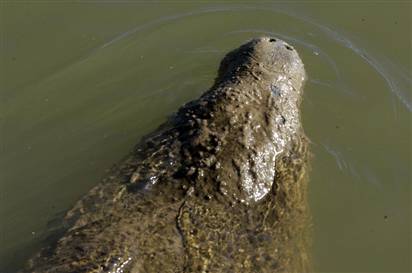
MEMPHIS - Would-be rescuers ended their search Friday for a manatee that strayed an unprecedented 700 miles up the Mississippi River, leaving the warm-water mammal to an uncertain fate far north of its natural range.

The manatee, which had been spotted several times since Sunday along the Memphis riverfront, eluded a rescue team that had hoped to haul it by truck to Florida.

Biologists were unsure if the animal could find its way back to warmer waters or how long it could survive so far north. (more)

Friday, April 21, 2006

A Real 'Green' House: No Heating Bill for 25 Years

from ScienceDaily:


When David Mears and his wife Dorothy put their house up for sale at the end of last year, it wasn't just the four-plus acres of beautiful woodlot land that made the property appealing. Nor were the five bedrooms or extra cabinet space in their roomy kitchen the most significant features.

The main attraction was the fact that the couple hadn't paid their heating bill for more than 25 years.

That's because they hadn't received one since 1980.

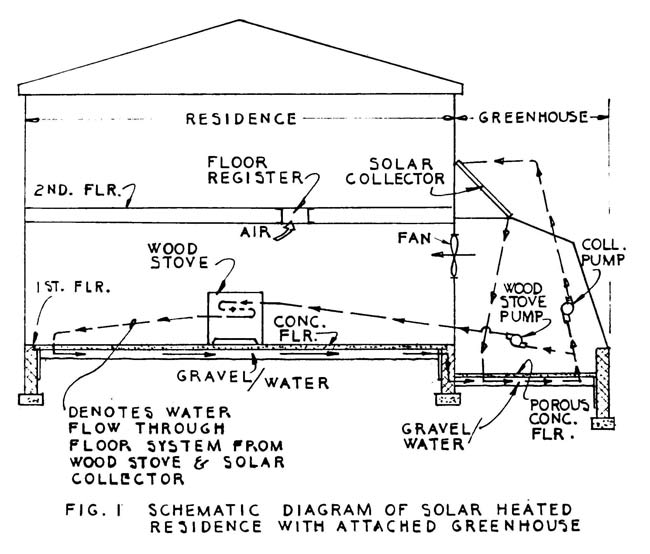
Using his knowledge of alternative energy sources for commercial greenhouses in response to the energy crisis of the 1970's, David Mears, a professor of Bioresource Engineering at Rutgers University, virtually eliminated the use of fuel oil for heating his home. (more)

The beauty of this system is that it uses 25 year old technology and works quite well. So much for the myth that says you can't depend on solar power for heating in the NorthEast.